
Flagship market
Data-center steel
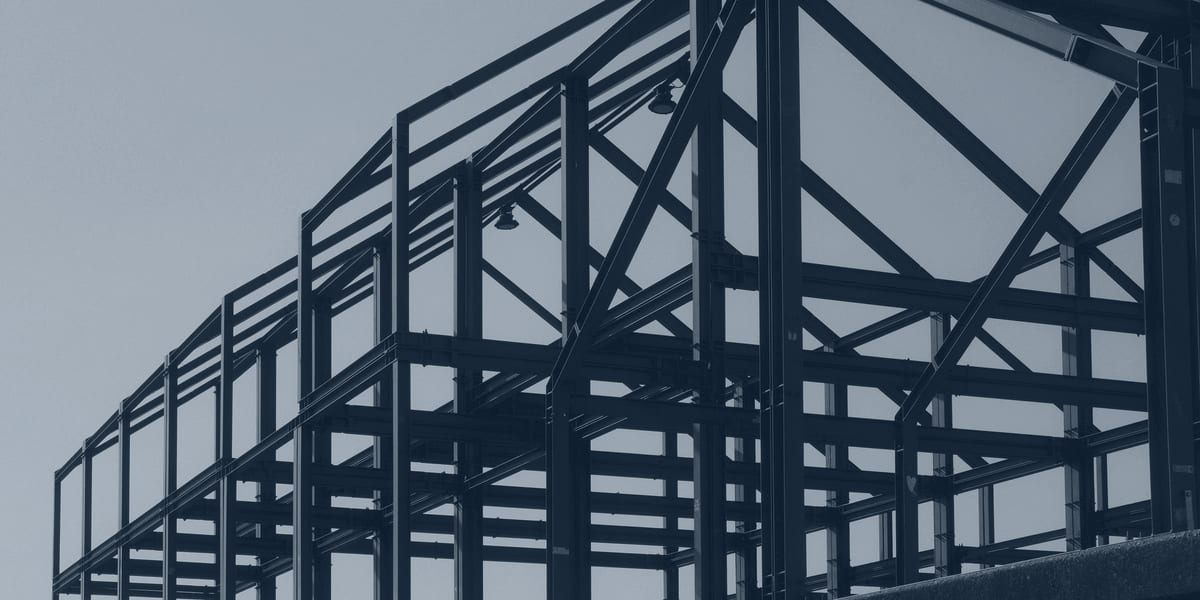
TMG fabricates and erects data-center steel on a schedule that cannot slip. High, concentrated vertical and uplift loads, tight tolerances, and liquidated-damages deadlines demand one accountable subcontractor. We keep the critical path intact from steel foundation piles to final bolt-up.
05 12 00 · Mission-critical
Why data centers demand single-source steel
A data center imposes high, concentrated vertical and lateral and uplift loads on a schedule that cannot slip. Steel is the earliest critical-path structure trade: the frame gates concrete infill, MEP rough-in, envelope, and the equipment fit-out behind it. When fabrication and erection sit with two companies, the fab-to-field handoff becomes a seam that owners with liquidated damages cannot afford. TMG fabricates and erects as one party, collapsing accountability to one contract and one QA/QC chain.
Concentrated dead and live loads from stacked equipment, batteries, and cooling.
Wind, seismic, and equipment-driven lateral and uplift demands on frame and anchorage.
Tight erection tolerances so raised floor, containment, and MEP land clean.
Fixed turnover dates commonly backed by liquidated damages. Steel gates everything after it.
On the boards now
Active data-center steel in St. George, SC
TMG is self-performing steel on an active data-center build in St. George, roughly 45 minutes from our Moncks Corner headquarters. St. George sits inside the Lowcountry data-center corridor that the Charleston region is generating, and that logistics advantage is real: crews, rigging, and deliveries stage from a nearby base instead of mobilizing across state lines. Being close to the work means faster response when a sequence tightens and less schedule risk baked into every mobilization.
Scope we self-perform
From foundation piles to the topping-out steel
TMG carries the deep-foundation steel and the superstructure above it under one subcontract, so the foundation-to-frame transition stays inside one QA/QC chain. We fabricate steel foundation piles for data-center foundations using conventional, fabricated steel pile methods, then detail, fabricate, and erect the frame and the miscellaneous metals that support the mechanical and electrical build.
- Structural steel frame: columns, beams, girders, and moment connections
- Steel foundation piles for data-center foundations
- Roof screens, equipment platforms, and generator and chiller supports
- Catwalks, crossovers, and access stairs to rooftop and interstitial equipment
- Embeds, anchor bolts, and setting plates coordinated to the concrete pour
- Miscellaneous metals: bollards, dunnage, grating, ladders, and cages
Related services: structural steel fabrication and erection, miscellaneous metals, and stairs and railing.
Single-source vs split
What single-source protects on a data center
| On the critical path | TMG single-source | Fabricator + separate erector |
|---|---|---|
| Accountability | One contract, one party owns the date | Two contracts, blame trades hands at the handoff |
| Sequencing | Fabrication built to the erection plan | Two schedules to align across companies |
| Tolerances | Detailer and erector are the same team | Field fits chase someone else's shop |
| QA/QC | One continuous quality chain, shop to field | Two separate quality chains to reconcile |
| Program scale | Repeatable details across buildings | Coordination cost repeats per building |
The takeaway for a mission-critical owner: fewer seams, one QA/QC chain, and one party whose name is on the schedule you are protecting.
FAQ
Data-center steel: FAQ
Why is single-source steel the right model for a data center?
Because a data center runs on a fixed turnover date, usually backed by liquidated damages, and steel is the earliest critical-path structure trade. Splitting fabrication and erection puts a coordination seam at the fab-to-field handoff, the exact point where schedule risk concentrates. TMG fabricates and erects as one accountable party, so detailing, sequencing, and QA/QC stay under one roof and the critical path stays intact.
Does TMG have active data-center experience?
Yes. TMG is self-performing steel on an active data-center build in St. George, SC, roughly 45 minutes from our Moncks Corner headquarters. That location sits inside the Lowcountry data-center corridor, so our crews, equipment, and deliveries stay close to the work rather than mobilizing from out of region.
Can TMG furnish steel foundation piles for data-center foundations?
Yes. TMG fabricates and installs steel foundation piles for data-center foundations, keeping deep-foundation steel and the frame above it under one accountable subcontractor. Handling piles and superstructure together removes a handoff between separate specialty trades and keeps one QA/QC chain through the foundation-to-frame transition.
Can TMG scale across a multi-building data-center program?
Yes. Data-center campuses repeat buildings, so detailing, connections, and erection sequences repeat with them. TMG builds that repeatability into the shop and field plan, so each building draws on proven details rather than starting over. Our shop and field crews are structured to run concurrent phases across a program.
What certifications back the work?
TMG welds to AWS D1.1 with certified welders and qualified procedures, and runs a documented OSHA safety program. We are licensed and insured across SC, NC, and GA and bonded for single and aggregate capacity, which clears the prequalification bar mission-critical owners and their GCs set.
Request a Quote
Bidding a data center in the Carolinas or Georgia?
Send drawings or a bid package and get a responsive quote from a fabricator and erector that self-performs from piles to frame.